

Business consultants
Securities Finance Consultants: 8
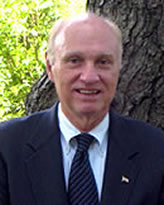
Investment Banking Consultant William Purcell
William H. Purcell
Investment Banking Expert Witness
225 Cedar Ridge Road
Bedminster NJ
07921
USA
phone: (908) 781-1803; cell: (908) 581-1203
Financial Consultant Norman Katz
Kelly Zinser
Principal
1278 Glenneyre Street
Ste. #454
Tustin CA
92651
USA
phone: 949-263-8700
fax: 949-263-0770

International Fiduciary Consultant Karina Sneiderova
Dr. Karina Sneiderova, MBA, ICFA, ASI
Vice President
Headquarters
Rue General Dufour 22
Geneva
CH-1211
CHE
phone: 41-225-752-948
fax: 41-225-948-025

Securities Financial Fraud Consultant Braden Perry
Braden M. Perry, Attorney at Law
2000 Shawnee Mission Parkway, Suite 210
Mission Woods KS
66205
USA
phone: 816-527-9445
fax: 855-844-2914
Cannabis Real Estate Consultant Peter Ingersoll
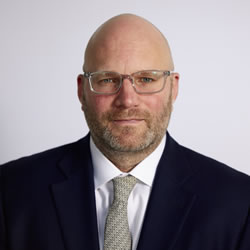
Peter Ingersoll
CCIM – CEO & Corporate Broker
1548 Mission Meadows Drive
Oceanside CA
92057
USA
phone: 925-918-3649

Safe Harbour Equity, Inc. offers Commercial Real Estate Brokerage, Capital Advisory, and Site Acquisition services for the Cannabis Industry. Safe Harbour provides the legal, operational, and financial prerequisites for building sustainable startup businesses and successfully managing complex transactions, capital structures, startup protocols, and basis transfers.
Cannabis Consulting Services:
- Cannabis capital structures, financial statements, valuation, sale - lease back transactions, cannabis recapitalization & reorganization plans, cannabis receiverships
- Cannabis real estate and company financing structures and tax deferred transactions, 1031 exchanges
- Cannabis off balance sheet financing, startup equity investing, mezzanine debt, preferred equity, accredited investing
- Responsibilities of fiduciaries and the contractual implications of fiduciary duty
- Sale of unregistered securities & private placements, investment waterfalls and securities, disclosures, compliance, issuer liability
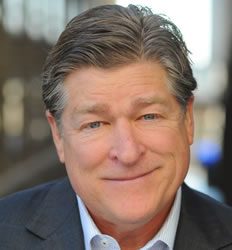 Peter John Ingersoll is a distinguished CEO and Corporate Broker for Safe Harbour Equity, Inc., specializing in Cannabis Real Estate and Investment. With over 40 years of experience in investment real estate, construction, development, trust, and banking, Peter is a thought leader in cannabis capital structures, financial statements, valuation, sale lease-back transactions, recapitalization, and reorganization plans. His expertise extends to off-balance-sheet financing, startup equity investing, mezzanine debt, and preferred equity. He is a former Series 7, 22, and 63 licensee, as well as a Series 65 registered investment advisor (RIA),
Graduate of Wharton School – University of Pennsylvania – Finance
FINRA Compliance Consultants Scopus Financial Group
Thomas M. Selman, CFA
President & CEO
1221 Woodside Parkway
Silver Spring MD
20910
USA
phone: 914-296-4346
Securities Software Compliance Consultant David Tilkin
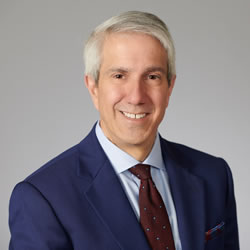
David Tilkin
36 Canterbury Street
Hingham MA
02043-1406
USA
phone: 781-838-4643

 David Tilkin is a Litigation Support and Consulting Specialist with over 20 years of experience in the Securities Industry and over ten years of experience in the Compliance Software Industry. Mr. Tilkin was the founder and CEO of Protegent, the first company to deliver automated exception reporting, auditing and sales practice review technology to the financial services industry. Protegent was sold to SunGard, Inc.
Currently the President and CEO of the Tilkin Group, Mr. Tilkin offers consulting and strategic leadership to lawyers, regulators, and companies seeking support in litigation, software procurement, and strategic planning. He maintains a Series 65 license and has previously maintained a Series 63, 7, 8, 4 and insurance licenses. He has extensive training in the securities industry as a broker, manager and regional director.
Mr. Tilkin has leveraged his intensive background in all aspects of broker-dealer operations to provide insightful, resourceful, and practical support. He has published numerous articles on the issues of suitability, supervision and financial services software and was recently asked to speak on the issue of financial services supervision at the Securities Law Clinic at Cornell University in Ithaca, New York.
Consulting Services Include:
|
|
Structured Finance Consultant Craig Wolson
Craig Wolson
Expert Witness and Consultant
One Grand Central Place, 60 E. 42nd Street
Suite 4600
New York NY
10165
USA
phone: 203-858-4804
Featured resources

by Bankole A. Johnson, MD

by George O. Waring, MD, FACS, FRCOphth
by Chuck Easttom
Follow us


