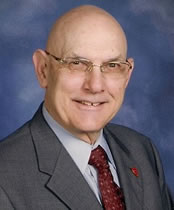
Michael T. Motley, Ph.D. has over thirty-five years of experience in the fields of Communication & Psycholinguistics. Dr. Motley serves as an expert witness for opinions on the clarity, lack of clarity, and most likely interpretation of common messages such as warning labels, instructions, advertising, contracts, waivers, and so forth. He has served on over 30 cases; about 2/3 for plaintiff and 1/3 for defense. Dr. Motley is a Professor Emeritus of Communication at the University of California at Davis. He has authored almost 200 books, articles, and research papers in communication and psycholinguistics. He has won eighteen excellence awards for his research and was recognized as among the "Top 1%" of communication scholars of the 1970's, 1980's, and 1990's. Areas of Expertise:
- Communication Messages: Meaning, Ambiguity, Likely and Alternate Interpretations, Communicative Intention
- Adequacy/Inadequacy of Messages: Product Warnings, Instructions, Waivers, Advertisements
- Male / Female Misunderstandings: Sexual Consent/Resistance, Date Rape
Services Offered:
- Expert testimony & Consultation
- Opinion on Adequacy of Communication Messages
- Opinion on Likely Consumer Interpretation of Warnings, Instructions, Advertising
- Opinion on Likely Intrepretation of Sexual Resistance/Consent Messages and Behaviors
- Social-scientific testing of expert opinion (his and others')
View Consulting Profile.
By: Dr. Michael T. Motley
If you do work as an expert witness on warnings, you probably feel quite confident that you know a bad warning when you see one (and would know a good one if you ever saw one). Of course, backing up our opinion with some version of, "I just know" doesn't make for very strong testimony. Indeed, we can count on our criteria being challenged by opposing council even when we can articulate them.
By: Dr. Michael T. Motley
My first expert witness case involved a man who was injured using a chinup bar designed to fit within a door frame. The bar has rubber suction cups at each end, and its length is adjusted by twisting its two sections together or apart for a telescoping effect.
Michael T. Motley, PhD
In this volume, recognized scholars discuss ways they have applied communication research to court cases as an expert witness or consultant in such areas as jury selection, pretrial publicity, sexual consent, warning adequacy, hindsight bias, jury decision making, document authorship identification, graphics and simulations and several others. For attorneys, the volume may provide an introduction to ways that communication scholarship can inform their future cases.
Michael T. Motley, PhD
This book offers solutions for communication problems that erupt in our daily lives. By focusing on socially meaningful applied research in communication, this book offers a new direction for interpersonal communication studies. Featuring original studies that are practical and relevant, chapters provide readers with a balanced combination of rigorous research with pragmatic application.