7/14/2009· Accident Investigation & Reconstruction
There are approximately 180,000 lawnmower accidents per year. In this introductory presentation, we undertake to describe the various ways in which these accidents occur.



By: Kristopher J. Seluga, PE
Tel: (203) 329-9909
Email: Technology Associates
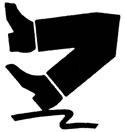 Second only to automobile accidents, falls are the leading cause of injury and deaths. Of these, accidents due to slipping or tripping form a large proportion. Slips and trips occur on floors, streets, walkways, stairs, etc. Although both slips and trips result in falls, they are otherwise quite different. A slip is associated with insufficient resistance between a foot and the walking surface, while a trip involves much more resistance than the victim had anticipated. A third type of fall results from a loss of balance. This can occur when one expects a surface to provide support, but it does not, such as while descending a staircase with an unanticipated long rise height step.
We have a vast amount of experience in many aspects of fall downs including:
Through scientific analysis, we can help you answer pertinent questions such as:
Exterior Staircase Fall Down:
After exiting a building, an elderly woman descended an outdoor, wooden, wide set of stairs. While doing so, she lost her balance, fell, and was seriously injured. Upon inspection, we determined that the rise height of the step where she fell was a half-inch higher than the previous steps. In addition, there was no handrail nearby. Both these items represented significant hazards and building code violations. The defendant settled the lawsuit after receiving our report.
City Park Fall Down:
A woman claimed that she had tripped on a walkway over a post protrusion at a city park and injured her eye socket. We performed a biomechanical simulation and video animation, which showed that a fall onto the flat walkway could not have caused her injuries, and that a witness, who saw her being blown against a park bench, offered a more consistent explanation. Consequently, a jury found that the city was not liable for her fall and injuries, as they could not control outdoor winds.
Kristopher J. Seluga, PE, is a Mechanical Engineering, Accident Reconstruction, Biomechanics, and Safety Expert with over 20 years of experience. He received his Bachelor's and Master's degrees from the Mechanical Engineering department at MIT where he worked on the development of novel three-dimensional printing technologies. Mr. Seluga is also a licensed Professional Engineer in New York and Connecticut, and has served as a member of the ANSI engineering committee for the Z130.1 and Z135 standards for golf cars and PTV's. His research interests and peer reviewed publications span the topics of Motor Vehicle Dynamics, Product Safety, and Biomechanics.
©Copyright - All Rights Reserved
DO NOT REPRODUCE WITHOUT WRITTEN PERMISSION BY AUTHOR.

7/14/2009· Accident Investigation & Reconstruction
There are approximately 180,000 lawnmower accidents per year. In this introductory presentation, we undertake to describe the various ways in which these accidents occur.
7/31/2009· Accident Investigation & Reconstruction
Forensic Engineering Experts: Products Liability
An end user of a product expects that a given product will not only function as intended, but will be safe from non-obvious hazards. Based upon decades of experience with mishaps during use of common and specialized equipment, thousands of standards have been developed for many consumer products and industrial equipment. Numerous organizations exist, e.g., ANSI, ASTM, SAE, and ASME, that regularly review and update these standards.
8/7/2009· Accident Investigation & Reconstruction
Forensic Engineering Experts: Animation
Animations are useful visual tools that can help jurors understand how an incident could, or could not, have occurred. Simply describing an event in court, or showing still pictures, may be insufficient to explain a complex sequence of events.