

expert witnesses
Alcohol, Drugs and Substance Abuse Disorders Expert Witnesses: 13
Medical Toxicology Emergency Medicine Expert Witness David Schaffer
David H. Schaffer, MD, MRO
Director of Medical Toxicology
Greenville SC USA
phone: 828-260-3742

Environmental Toxicology Expert Witness Ted Simon
4184 Johnston Road
Winston GA
30187
USA
phone: 770-359-9807 (office) and 770-359-980 (cell)

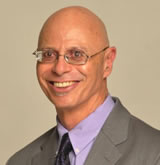 Ted W. Simon, PhD, DABT, is an award winning Environmental Toxicologist and Scientist. His expertise is in toxicology, risk assessment, mathematical modeling, statistics, neuroscience, and environmental / ecological health issues.
Dr. Simon has over 10 years of experience as a toxicologist employed by the Environmental Protection Agency (EPA). He served as EPA’s senior toxicologist in the waste management division working on risk and soil cleanup.
Teaching Experience - Since 2001, Dr. Simon has served as an Instructor / Adjunct Professor in the Department of Environmental Health Science, College of Public Health, at the University of Georgia.
Public Speaker - Well published, including the author of a textbook on toxicology and environmental risk assessment, Dr. Simon has extensive national and international public speaking experience. Since 1996, he has been delivering seminars and lectures to universities and national institutes on many subjects within his area of expertise. In 2016, he delivered a lectures on “Bayesian Methods for Application of Uncertainty Factors,” to the Society of Toxicology Annual Meeting, New Orleans, LA, and “Quantitative Prediction of Phenotypic Change from High Throughput Assay Results,” to the EPA's Workshop on In Vitro to In Vivo Extrapolation, Research Triangle Park, NC.
Litigation Support - Dr. Simon has over 15 years of experience offering expert witness services to counsel representing both plaintiff and defendant. He has been retained over 20 times since 2000 for cases involving environmental risk, drug and alcohol cases, DUI, accidental poisoning, and intellectual property. Dr. Simon has particular expertise in dioxin-like chemicals and polychlorinated biphenyls (PCBs). His services include consulting, reports, deposition, and trial testimony when necessary.
Areas of Expertise:
|
Forensic Psychiatry Expert Witness Sanjay Adhia
Sanjay Adhia, MD, MRO
Forensic Psychiatrist and Med-Legal Consultant
5826 New Territory Blvd., Suite 803
Sugar Land TX
77479
USA
phone: 832-746-5905
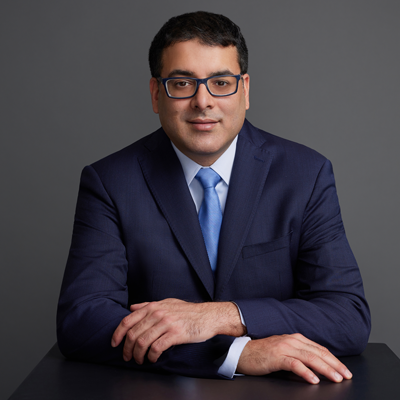
Security Expert Timothy Dimoff
Timothy A. Dimoff
President
520 S. Main Street
Ste 2516
Akron OH
44311
USA
phone: 330-255-1101
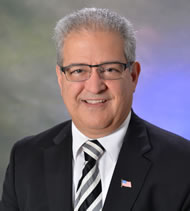 Timothy A. Dimoff, CPP, founder and president of SACS Consulting & Investigative Services, Inc. a leading security consulting firm, has over 40 years of experience in Law Enforcement and Security matters for both the public and private sectors. He is multi-certified in the security field and is considered one of the nation's leading authorities on negligent security procedures; security & vulnerability issues; police procedures and operations including use of force; high-risk workplace and human resource issues; narcotics investigations and enforcement.
Mr. Dimoff is board certified by ASIS as a Certified Protection Professional (CPP?) which is internationally recognized as the “gold standard” certification for security management professionals, demonstrating their knowledge and competency in seven key domains of security.
Litigation Support - Mr. Dimoff has over 20 years of experience in testifying and consulting as an expert witness in over 500 cases and trials for both the plaintiff and the defense sides. His expert witness experience includes law enforcement procedures, security negligence of business or physical premises, human resources issues, meeting standards of practice in hiring and termination, employment practices, proper documentation, training, supervision, policies and procedures, harassment, discrimination, internal investigations, threats and excessive use of force.
Mr. Dimoff is a renowned speaker, trainer, and author who has offered expert commentary to national media including Dateline, NBC, CNN, The Chicago Tribune, The New York Times, The LA Times, The Washington Post, and The Wall Street Journal. He is the author of four books, including How to Recognize Substance Abuse, The YOU in Business, and Life Rage, a chilling examination of societal rage and safeguards against it.
Mr. Dimoff holds a Bachelor of Science Degree in Sociology with an emphasis in Criminology from Denison University.
Areas of Expertise:
|
|
Forensic Psychology Expert Witness Ray Kim
Ray S. Kim, Ph.D.
Forensic Psychologist
5400 Prairie Stone Parkway
#156
Hoffman Estates IL
60192
USA
phone: 847-309-7475
fax: 847-984-9292
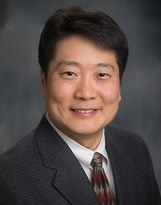
Toxicology Expert Dr James Norris
Dr. James C. Norris, DABT, EURT
ALL STATES
USA
phone: 866-526-6774
Pharmacy Drug Error Expert Witness Nicholas Ladikos
Nicholas Ladikos, PharmD, FASCP, BCPS, BCGP, BCIDP
709 East Bethel School Road
Coppell TX
75019
USA, International
phone: 561-306-6595
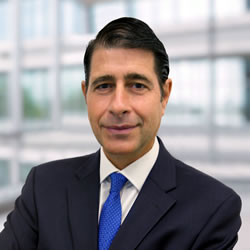
Addiction Medicine Expert Witness William Santoro
William Santoro
MD
1633 Old Wyomissing Road
Wyomissing PA
19610
USA
phone: 610-223-5949
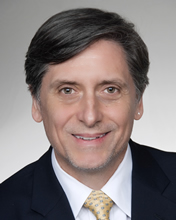
Forensic Psychiatry Expert Witness James Reich
James H. Reich, MD, MPH
1988 Greenwich St
San Francisco CA
94123
USA
phone: 415-673-2950
fax: 415-673-2229
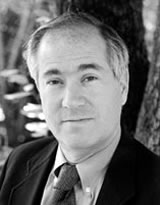 James H. Reich, MD, MPH, is a board-certified Forensic Psychiatrist with extensive civil psychiatry experience who has done hundreds of evaluations.
After getting his MD from the University of Colorado Medical Center in Denver, Dr. Reich earned his MPH at Yale University and did his psychiatric residency at UC Davis. Dr. Reich has held academic positions at Yale, Iowa, Harvard, and Brown Universities. Currently, he has teaching appointments at the professor level at both UCSF and Stanford University. Throughout his career, he has published over a hundred peer-reviewed publications.
Litigation Support - Dr. Reich’s services are available for civil and some criminal law cases. Clients are assured of his personal dedication to each case. He does high quality research, expert evaluations, writes a solid report, and will testify well. Dr. Reich has been deposed over 50 times.
Areas of Expertise:
|
|
Presentations - As faculty at the Stanford Forensic Fellowship program, Dr. Reich has given two talks to the group. On October 27, 2023, he presented, "What Gets Psychiatrists and other Medical Professionals into Problems with the Law or Regulators." On January 19, 2024, he presented a talk on Psychiatric Disability to the same group. Dr. Reich is also supervising a fellow on his project on competency issues in older physicians.
Clinical Forensic Psychology Expert Witness Charles Heller
Charles H. Heller, PhD
Addresses Below
NY, NJ USA
phone: 212-880-3789 - Alternate Numbers Below

 Charles H. Heller, PhD, is a Forensic Psychology Expert with over 35 years of experience in his field. Dr. Heller is currently on staff at Rutgers University Biomedical Health Service, specializing in criminal behavior and risk assessment. He also serves as a forensic psychologist consultant for the Rockland County (NY) court evaluation service, where he has performed hundreds of child custody, as well as criminal competency and child abuse/neglect evaluations.
Litigation Support - Dr. Heller specializes in conducting custody evaluations, providing the review and analysis of potentially mitigating circumstances in connection with criminal behavior, and providing consultation to attorneys regarding civil litigation. He has extensive court experience in Civil, Criminal, and Family Court cases. Dr. Heller is a fully vetted and approved forensic psychologist for the NJ Office of the Public Defender as well as other Public Defender offices. (Federal Public Defender, Legal Aid in Manhattan, Bronx, Kings, and the NYC assigned counsel program). He often travels throughout the US as a forensic consultant in important court cases including military Court Martials, death row assessment, sexual abuse, assault, and multiple homicides. He is well-known and respected among his colleagues as a clinician and as a forensic psychologist/expert witness.
Civil Litigation - (Emotional and Mental Injury) - Dr. Heller is retained by both plaintiff and defense counsel to assess plaintiffs for emotional and mental injury. He takes an unbiased, ethical approach to assessments and is not "a hired gun." He is an expert in objective evaluations that assess the probability the plaintiff is suffering PTSD, other emotional injuries, or if there is an exaggeration of symptoms based upon psychological testing and other data. He has expertise in cases that involve group home / residential schools, provider negligence, and assaults.
Criminal Litigation - Dr. Heller is experienced in providing successful rebuttal testimony explaining the scientific issues related to the problems of validity, reliability, and usefulness of "Syndrome evidence" such as "Child Sexual Abuse Accommodation Syndrome" and "Rape Trauma Syndrome." He testifies in child sexual abuse cases and explains research related to false allegations, recantations, memory, suggestibility, child testimony, interview protocols, and "Believed-In Imaginings" in children and adults. He has expertise in domestic violence and has assessed women who have been victims of intimate partner violence and "Battered Women Syndrome" that contributed to homicides, assaults, and other felonies by the victims of abuse.
| Manhattan: (Mailing Address) Two Park Avenue, 20th Floor New York, NY 10016 Phone: 212-880-3789 Alt. Phone: 845-354-0535 Fax: 845-354-1287 | New Jersey: (Alternate Mailing Address 140 East Ridgewood Avenue South Tower, Suite 415 Paramus, NJ 07652 Phone: 201-262-0331 Fax: 845-354-1287 |
Vocational Rehabilitation Expert Witness Christopher Lowery
Christopher A. Lowery, DHSc, CLCP
Clinical Health Practitioner
2500 E. T C Jester Blvd., Ste. 216 Houston, Texas 77008
USA, International
phone: 1-888-340-1116
fax: 1-877-700-5058

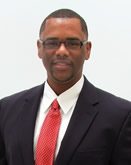 Dr. Christopher A. Lowery, DHSc, CLCP, is an international Clinical Health Practitioner with a special interest in global health initiatives. He is board-certified as a life care planner practitioner specializing in health promotion and prevention through the use of holistic, evidence-based approaches using a biopsychosocial health consultation model and the Universal Neurodiversity Continuum (UNC) Model™ across all individuals.
The UNC Model™ established by Dr. Lowery is a continuum-based approach that views human thinking, behavior, and mental health as naturally vary across individuals, focusing on personalized support rather than fixed labels.
Dr. Lowery passion has been to educate, empower, and provide hope to individuals with catastrophic health impairments. He focuses on educating and counseling individuals on improving their quality of life, addressing social, cultural, and behavioral barriers across diverse populations impacted by poor healthcare conditions.
He currently holds the following degrees: Bachelor of Science in rehabilitation studies from University of North Texas (07), Master of Arts in human and health administration services from University of Oklahoma (10), Post-Specialty Certificate in life care planning from Capital University Law School (12), Post-Master's Certificate in rehabilitation counseling from University of Arkansas at Little Rock (14), and Doctor of Health Science in global health from Nova Southeastern University (16).
Dr. Lowery holds a board certification in life care planning as a Certified Life Care Planner (CLCP) from the International Commission on Health Care Certification (ICHCC), which is accredited and recognized by the American National Standards Institute National Accreditation Board (ANAB). This prestigious certification attests to his qualifications and competence in healthcare delivery systems. ANAB’s accreditation ensures that the certification process meets rigorous international standards, confirming his aptitude and expertise for his role as a practitioner.
**If you have a case needing Dr. Lowery's expertise, please feel free to call his office for a free consultation.
Note: Please see below our website for more areas of expertise.
Areas of Expertise:
|
|
Psychotherapist Expert David Friedler
David Friedler, LMHC, MPH
Owner
65 Wachusett Street
Unit 2
Jamaica Plain MA
02130
USA
phone: 617-515-4418
fax: 617-344-0444
Forensic Psychiatry Expert Witness Jessica Chaudhary
1698 Post Road East, Suite 2A
Westport CT
06880
USA
phone: 206-240-5536
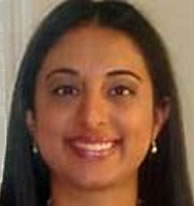
Featured resources
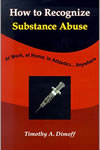
by Timothy A. Dimoff
by Eric A. Woodroof

by Dr. Rod Ghani
Follow us


