Quantcast
banner ad

Power Tools Safety
There are 3 expert witnesses in this category

Check for SynapsUs
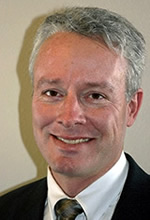
Gary E. Kilpatrick, PE, NSPE
President and Chief Engineering Officer
3397 Cherrybrook Drive
Jamestown NC 27282
USA
phone: 336-841-6354 (Office) 336-803-1639 (Cell)
fax: 339-841-6354
Gary E.
Gary E. Kilpatrick and Associates, PA is a Forensics Engineering Firm dedicated to the application of the art, science and methodology of engineering and the scientific method to answer questions of fact in the jurisprudence system pertaining to personal injury and wrongful death. We provide technical competency, forensic evidence collection from the field and from documents, oral and written communications, objective, ethical and professional responsibility.

We are familiar with the Federal Rules of Civil Procedure, Federal Rules of Evidence and Daubert and have given sworn expert testimony under oath during judicial proceedings. We are retained by law firms, public defenders and insurance companies on plaintiff, defense, criminal and claimant cases and work nation wide.

Areas of Expertise:
  • Traffic Accident Reconstruction
  • Vehicle Crash Data Report Retrieval and Interpretation
  • Off-Road ATV Accident Reconstruction
  • Motorcycle Accident Reconstruction
  • Vehicle Inspections
  • Industrial Accident Reconstruction
  • OSHA Safety 29CFR1910
  • OSHA 29CFR1926
  • OSHA 29CFR1928
  • Product Liability Investigations
Synopsis: The Basic Process Of A Traffic Accident Reconstruction
A Traffic Accident Reconstruction is a process by which an engineer determines from all available information and evidence how and why a traffic accident occurred including but not limited to pre-impact and post impact vehicular velocity vectors, pre-impact and post impact vehicular direction vectors, vehicular change in velocity (Delta-V), momentum vectors, vehicles' point of impact on the roadway, vehicular visibility by a driver, vehicular crash data retrieval reports if assessable, accident factors and causes.

7/8/2011 · Engineering
Product Design, Product Manufacturing And Product Quality Control Issues
Quality control starts at the point of product conception and is carried all the way through to the final design and manufacture of a product.

Automotive Lamp Filament Analysis
Some motor vehicle accidents take place during the night time hours when natural sun light is not present.

The Physics Of Collision
When we drive our vehicles down the road, we are driving them at a certain velocity and direction. All vehicles have weight and mass to the order of a few hundred pounds for a motorcycle, a few thousand pounds for a large SUV or luxury car or several tons for a tractor-trailer truck. When our vehicles move at speed down the road, they create energy by virtue of their mass and forward velocity

Check for SynapsUs
Contact: Sandy Armitage
1020 Airpark Dr.
Sugar Grove IL 60554
USA
phone: (630) 556-9700
fax: (630) 556-9710
Contact: Sandy
ITC Experts provides top Technical Experts for the Legal and Insurance Communities. ITC is organized as a collaborative of experts and facilities from multiple, varied groups, but unlike a brokerage or finder service, ITC has a staff of experts who augment their deep experience and industry-leading qualifications with the specialized knowledge and resources of collaborators from leading universities, government laboratories, technical societies, and industry.

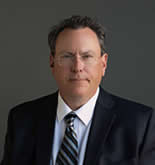
Dr. David Curry

Dr. David Curry, PhD, CHFP, CSP - Consultant, Human Factors and Safety

Dr. Curry is Vice President, Human Performance Sciences and Technology for ITC Expert Services. He holds graduate degrees in Experimental, Human Factors, and Cognitive/ Perceptual Psychology, Industrial Engineering, and Business and his experience includes nearly 30 years of work in accident investigation, product design and development, operational testing and analysis, and both laboratory and field research. He consults on all aspects of human factors, human performance, ergonomics, and safety.

Areas of particular expertise include: human-machine interface design and evaluation, human capabilities and limitations in applied environments, industrial ergonomics, warnings, vision and visibility, slips/trips/falls, the evaluation of equipment, facilities, and structures from a human use standpoint, and safety-related issues in general. He is recognized as an expert in operator-vehicle interaction, is both a Certified Human Factors Professional and Certified Safety Professional, has published nearly fifty technical papers dealing with various issues relating to applied human performance and accident investigation. He has been awarded several patents and sits on national standards-making committees for a variety of organizations (ANSI, ASTM, and SAE.) He has provided testimony in both State and Federal courts. View Curriculum Vitae.

John Meyer

John Meyer, PhD, PE - Mechanical & Materials Engineering

Dr. John Meyer is responsible for the engineering investigation and reconstruction of accidents, incidents, and failures of all kinds. With his background in mechanical engineering and physics, Dr. Meyer has conducted and directed hundreds of investigations over the past 16 years involving a widely diverse range of items, including aircraft, industrial equipment and machinery, automobiles and other vehicles, as well as consumer products. In addition to incident causation, Dr. Meyer frequently evaluates issues such as engineering design, machine guarding, warnings, and human behavior. Dr. Meyer has particular expertise in the modeling, analysis, and control of vibration and dynamic systems. He analyzes loads, forces and assesses mechanical design.

Areas of Expertise:
  • Modeling, Analysis, and Control of Vibration and Dynamic Systems
  • Analyzes Loads, Forces and Assesses Mechanical Designs
  • Human Factors including Human Perception, Reaction, and Operator Behavior
View Curriculum Vitae.

Steben Meyers

Steven Meyers - Aviation Safety

Mr. Meyers is an experienced aerospace professional that combines scientific analysis, material science, laboratory testing, piloting expertise, aircraft maintenance, and human factors to investigate air safety issues. He has a Masters Degree in Aeronautical Science, B.S. in Engineering Physics, A.S. in Manufacturing Engineering Technology, and an Extension Diploma in Applied General Metallurgy.

Profile:
  • Aviation and Human Factors: Piloted / instructed in 51 different types of aircraft ranging from turbines to gliders to sea planes. Multi-engine, instrument rated commercial pilot, active flight instructor, FAA licensed Airframe and Power Plant Mechanic (A&P), and FAA maintenance inspector (IA). Understands the interrelationship between the Person-Machine-Environment.

  • Accident Investigator: Applies scientific methods to accurately reconstruct and explain the circumstances of an accident. Investigations ranging from the in-flight failure of composite airframe structures to the use of unapproved parts to reconstructing ground vehicle incidents. Adjunct Faculty Member in the Aviation Department of Lewis University teaching courses in Applied Aircraft Accident Investigations. IL licensed Private Detective.

  • Material Scientist: Brings a strong experience in applying modern materials science coupled with a focus on failure analysis and the use of standardized testing techniques. Evaluates the effects of corrosion, temperature, and mechanical stresses on the performance of materials. Analysis performed on fractured thru-bolts, crankshafts, fuel pumps, carburetors, and bearings.

  • Failure Analyst: Provides practical and comprehensive laboratory testing that is independent and unbiased. Capable of performing a broad range of tests to determine the strength, physical, chemical, and wear properties of metals, coatings, ceramics, composites, and plastics. Access to ASTM qualified test machines, optical microscopes, SEM, FTIR, load cells, and accelerometers.

  • USAF Non-Commissioned Intelligence Officer: Confident public speaking skills with experience in preparing briefings and making recommendations to high-level military commanders.
Areas of Expertise: Aircraft Design and Operation, Aircraft Performance, Avionics & Autopilots, Piloting & Training, Turbines/Reciprocating Engines, Major Repairs/Alterations, Human Factors, Aviation Psychology, FAA Regulations & Certification, Accident Investigation, Wreckage Reconstruction, In-Flight Break-Ups, Mid-Air Collisions, Flight Path Reconstruction, Crashworthiness, Loss of Control, System Failures, In-Flight Fires, Cockpit Automation, Mechanical Testing, Material Compatibility, Fracture Analysis, Metal Fatigue, Composite Materials, Mechanical Fasteners, Tribology & Wear Testing, Fretting, Galling & Corrosion, Lubricants, Greases, & Fuels. View Curriculum Vitae
Check for SynapsUs
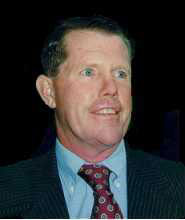
Thomas Read
Principal
1435 Fulton Rd.
Santa Rosa CA 95403
USA
phone: (707) 544-2374
fax: (707) 544-2370
Thomas
Expert Background: Dr. Thomas L. Read is the Principal and CEO at A. Read Consulting, LLC. He received his PhD. from Stanford University in 1972 and has over 25 years of manufacturing experience in electronics, metallurgy, factory safety, failure analysis, glass fracture, glass failure and bottle failure. As a member of the electronics industry, he has earned process patents and has an extensive background in manufacturing techniques.

In parallel, Dr. Read has spent over twenty five years as a consultant to attorneys and engineers. He has given more than 100 depositions and has appeared in court numerous times.

Company Profile: Read Consulting, LLC is a full service laboratory providing services in the following areas:
  • Failure Analysis; Factory Safety and Personal Injury (including machine guards and manufacturing safety)
  • Glass Failure Analysis - Glass Fracture, Glass Failures and Bottle Failure
  • Metal and Ceramic Failure
  • Grinding Wheel Failures
  • Intellectual Property and Patent Disputes
  • Product Liability and Product Quality
  • Manufacturing Disagreements (such as Intellectual Property, Failed equipment and Contract Disputes)
  • Reverse Engineering
  • 11/8/2011 · Failure Analysis
    Root Cause Failure Analysis of Tempered Glass Door
    Glass Failure Analysis Expert Witness performs a failure analysis of a several tempered glass doors that had "spontaneously" failed at a construction site. The objective of this glass failure analysis is to determine the cause of failure and make recommendations to the contractor.

    8/30/2011 · Failure Analysis
    Metal Failure Analysis: Metal Food Contaminant Failure Analysis
    Materials failure analysis expert performs a failure analysis to determine the source of a metal piece found in tomato product.

    5/17/2011 · Failure Analysis
    Plumbing Failure Analysis: Stress Corrosion Cracking of Yellow Brass
    A plumbing failure analysis was performed to determine why a cold water supply line to a bathroom sink had failed after only one year of service.

    Failure Analysis of a "Exploding" Beer Bottle: Product Defect, Product Liability
    A glass failure expert witness performs a root cause failure analysis on an exploding beer bottle. The object of this root cause failure analysis is to determine the cause of the bottle failure.

    7/7/2009 · Design
    White Paper: Reverse Engineering
    Before expending the effort necessary to reverse engineer a device or object, it must be definite that the object under study is not covered by one or more patents. This avoids a dispute over patent violations. Once it has been established that no patent coverage exists, one can use multiple techniques to reverse engineer a product. These are summarized below:

    Failure Analysis of a Failed Ceramic Water Holding Tank on a Toilet
    The cracked tank was first inspected in the "as received" condition. In this condition it was cracked, but it was still whole. Next, the failed tank was separated by pulling it apart. This was done to expose the fracture surfaces of the main crack. This allowed for a complete failure analysis and for a determination of where the crack initiated.

    Failure Analysis of a Broken Jam Jar
    Glass fractography is the most effective method for determining why a glass object, such as a bottle, failed. This technique consists of examining the fracture surfaces of the failure for artifacts such as Wallner lines and using them to trace the crack back to its origin. Once the origin has been identified, it can be examined in detail with a microscope to determine the cause of the failure.

    1/28/2006 · Failure Analysis
    Wine Bottle Failure Analysis
    Note: Glass Fractography is the most effective method for determining why a glass object, such as a bottle, failed. This technique consists of examining the fracture surfaces of the failure for artifacts such as Wallner lines and using them to trace the crack back to its origin