

expert witnesses
Police - Law Enforcement Expert Witnesses: 21
Law Enforcement Expert Witness Adam Bercovici
Adam Bercovici
Senior Investigator, Expert / Consultant, Owner
19550 Amber Meadow Drive Suite 227
Bend OR
97702
USA
phone: 661-607-4324
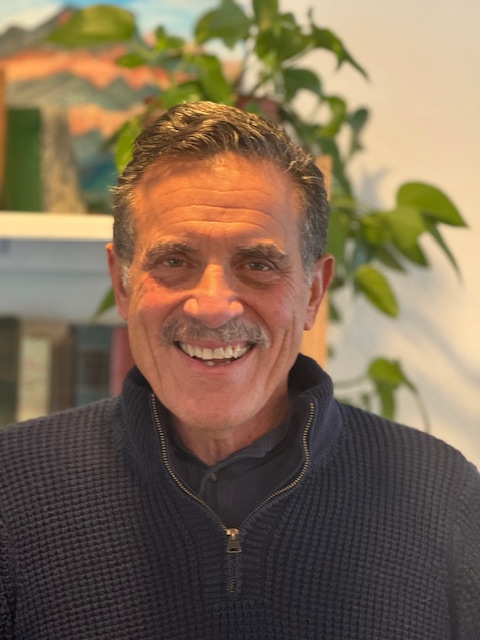
Firearms Use of Force Expert Witness Emanuel Kapelsohn
Emanuel Kapelsohn, JD
President
1636 N. Cedar Crest Blvd., #320
Allentown PA
18104
USA
phone: 610-360-7053
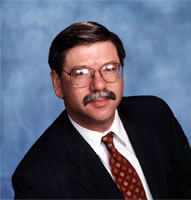
Law Enforcement Police Misconduct Expert Witness Beth Mohr
Beth A. Mohr, CFE, CFCS, CAMS, CCCI, MPA, PI
Managing Partner
2001 Carlisle Blvd NE
Suite A
Albuquerque NM
87110
USA, CAN, FLK, GUM, TCA, VIR, VIR
phone: 505-450-2818

Beth A. Mohr, CFE, CFCS, CAMS, CCCI, MPA, PI, is a Police Practices expert with over 30 years of sworn and non-sworn investigative experience. Ms. Mohr has testified as an expert in numerous state and federal court proceedings, depositions, and administrative hearings federal and state courts, including New Mexico, Ohio, Illinois, Arizona, California, and Washington state. Ms. Mohr has testified on a variety of subjects, including police procedures, police misconduct, white collar crime and fraud examinations. Her expertise has been verified by the courts via a Daubert challenge, in which Ms. Mohr was found to be qualified as an expert in police practices generally, and well as the specific areas of interviewing, interrogation, false and recanted confessions, cognitive bias, investigations and investigative failures, vice, and human trafficking. Ms. Mohr is neutral, fair, and her opinions are rooted in provable facts, as well as academic literature, where appropriate. She strives to balance her cases between defense and plaintiff-sided cases, and also provides habeas consulting services.
Ms. Mohr is credentialed as a Nationally Certified Law Enforcement Instructor by the IADLEST, and is one of fewer than 150 individuals who have been nationally certified as an expert law enforcement instructor. She is a Certified Fraud Examiner, Certified Force Science Analyst. Certified Anti-Money Laundering Specialist (CAMS), Certified Financial Crimes Specialist (CFCS) and a Certified Cyber Crimes Investigator (CCCI). She is also a Private Investigator (PI) licensed in New Mexico, Arizona, and California.
Areas of Expertise:
- Police Practices and allegation of Police Misconduct
- Use of Force, Excessive Force, Deadly Force
- Taser, ECWs, and other uses of force intended to be less-lethal
- Interviewing, Interrogations & False and Recanted Confessions
- Police Ethics
- Investigative Failure, Cognitive Bias, Confirmation Bias
- Habeas Consulting, including death penalty cases
- False Arrest
- Failure to Train / Failure to Supervise
- Evidence Handling
- Police Policy, SOPs
- Fraud & White-Collar Crime
- Vice & Human Trafficking
- Money-Laundering Cases
- Cryptocurrencies / Bitcoin
- Retaliation & Qui Tam
- Workplace Violence & Sexual Harassment
- Private Investigations & PI Failures
During her career with the San Diego Police Department, Ms. Mohr was awarded three Commanding Officer’s Citations, which were the highest awards offered by the San Diego Police Department for investigative acumen at the time. After retiring from the San Diego Police Department, she conducted death penalty mitigation investigations, and other complex felony investigations, including homicide and white-collar cases, for the Whatcom County, Washington, Public Defender’s Office. This includes conducting investigations of allegations of police misconduct for the City of Albuquerque Independent Review Office. Ms. Mohr recently chaired the City of Albuquerque’s Police Oversight Board, a civilian board which was created as part of the US Department of Justice’s Consent Decree with the City of Albuquerque and the Albuquerque Police Department.
Ms. Mohr has published a chapter entitled “Skepticism”, in the newly-released book The Art of Investigation Revisited, as well as having penned articles for bar journals and other peer-reviewed publications. Ms. Mohr has taught courses on law enforcement topics including interviewing techniques, investigative ethics, evidence collection, financial and fraud investigations, and many other topics. Her ethics courses, investigative courses, and fraud courses are certified for law enforcement credit.
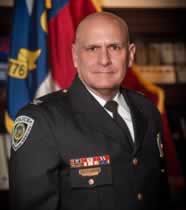
Law Enforcement Security Expert Witness Roy Taylor
Roy G. Taylor, Ph.D.
President
9650 Strickland Rd.
Suite 103-162
Raleigh NC
27615
USA
phone: 919-697-1995
Jails Prisons Corrections Expert Witness Joseph Gunja
Joseph E. Gunja
1468 S. Ledgestone Avenue
Springfield MO
65807
USA
phone: 417-224-5215
fax: 417-714-9086
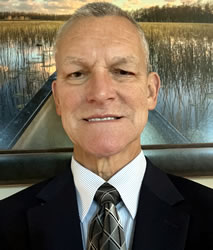 Joseph E. Gunja is a Jails, Prisons and Corrections Expert with more than 30 years of experience in the corrections industry. Mr. Gunja had a distinguished career with the Federal Bureau of Prisons (FBOP) for over 28 years serving as a Correctional Officer, Shift Supervisor, Investigator, Captain, Associate Warden, and Warden at three complex correctional facilities.
He also served as Regional Director of the Western Region for over 2 years and was assigned to the FBOP's Headquarters in Washington, DC where he was responsible for authoring national policy and official publications, providing technical expertise to the Assistant Director of Correctional Programs and facility Wardens, Associate Wardens, and Captains.
After retiring from the FBOP in 2007, Mr. Gunja has been providing correctional consultation and expert witness services. In addition, he has worked for two of the largest private corrections companies, CCA and GEO Group, as Warden at the Northeast Correctional Center in Youngstown, Ohio, and the Great Plains Correctional Facility in Hinton, Oklahoma.
Litigation Support - Joseph Gunja has an over 90% success rate in all cases he has been retained as an expert, both working with plaintiffs and defendants, as well as several cases of sentencing mitigation or reductions. While some cases were settled in lieu of court, the settlements were all in favor of the attorneys or firms he represented. He offers advice, expertise, and expert testimony for a variety of issues in matters pertaining to:
|
|
View Simco Correctional Consulting's Business Consulting Profile.
Security and Law Enforcement Expert Witness James Pastor
James F. Pastor, Ph.D, JD, CPP
Naples FL USA
phone: 293-327-9283

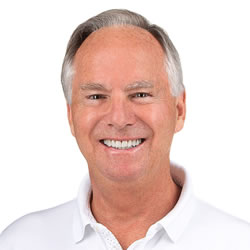 Dr. James F. Pastor, Ph.D, JD, CPP, brings a unique and remarkable career in Security, Policing, and Public Safety, starting as a tactical officer in Gang Crime Enforcement for the Chicago Police Department, one of the most active policing units in the country.
As a security expert, author, attorney, and former professor, Dr. Pastor merges security methods, academic theories, and legal principles; providing an exceptional level of depth and breathe in your case. As an attorney, he served and advocated for both the Chicago Police Department and for two police unions. In addition, he has represented both security guard and electronic security firms. These experiences bring broad experience into the security industry and public safety.
Augmented with a doctorate in Public Policy Analysis, he understands that policies create incentives and drive human behavior. As these directly impact public safety and crime, few possess his experience, his unique insight and his security sense.
Areas of Expertise:
|
|
Litigation Support - Dr. Pastor is a highly regarded expert witness with experience in policing, security, public safety, and legal issues relating to these. His depth and breathe of experience is substantive, yet practical. Bringing a unique background, along with credentials and skills, including participating in over 700 prior depositions, has proven to be very effective in his expert witness role.
Simply stated, Dr. Pastor brings practical “street cop” thinking layered with years of academic, legal, and professional experience. He understands the real world, criminological theories, and security methodologies. Combined with security laws and public safety policies, each are merged into authoritative analysis, assessments, and presentations.
Dr. Pastor has over 20 years of university teaching experience in security, public safety, and policing, including Northwestern University- Center for Public Safety and the International Law Enforcement Academy.
Author of four books on security and public safety, plus chapter on Private Policing in ASIS International's Protection of Assets Manual and created Privatization of Policing Bibliography for Oxford University Press, both being comprehensive, substantive works relating to Private Policing.
Criminal Investigation Expert Witness Arthur Chancellor
Arthur S. Chancellor, MCJA
Partner/Consultant
131 Wed Denning Road
Angier NC
27501
USA
phone: 919-360-3518
Law Enforcement Expert Witness Kenneth Sanders
Rodessa LA
71069
USA
phone: 318-584-9954
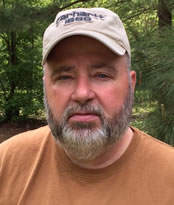
Security Expert Timothy Dimoff
Timothy A. Dimoff
President
520 S. Main Street
Ste 2516
Akron OH
44311
USA
phone: 330-255-1101
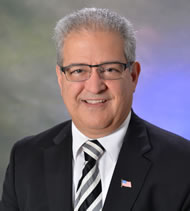 Timothy A. Dimoff, CPP, founder and president of SACS Consulting & Investigative Services, Inc. a leading security consulting firm, has over 40 years of experience in Law Enforcement and Security matters for both the public and private sectors. He is multi-certified in the security field and is considered one of the nation's leading authorities on negligent security procedures; security & vulnerability issues; police procedures and operations including use of force; high-risk workplace and human resource issues; narcotics investigations and enforcement.
Mr. Dimoff is board certified by ASIS as a Certified Protection Professional (CPP?) which is internationally recognized as the “gold standard” certification for security management professionals, demonstrating their knowledge and competency in seven key domains of security.
Litigation Support - Mr. Dimoff has over 20 years of experience in testifying and consulting as an expert witness in over 500 cases and trials for both the plaintiff and the defense sides. His expert witness experience includes law enforcement procedures, security negligence of business or physical premises, human resources issues, meeting standards of practice in hiring and termination, employment practices, proper documentation, training, supervision, policies and procedures, harassment, discrimination, internal investigations, threats and excessive use of force.
Mr. Dimoff is a renowned speaker, trainer, and author who has offered expert commentary to national media including Dateline, NBC, CNN, The Chicago Tribune, The New York Times, The LA Times, The Washington Post, and The Wall Street Journal. He is the author of four books, including How to Recognize Substance Abuse, The YOU in Business, and Life Rage, a chilling examination of societal rage and safeguards against it.
Mr. Dimoff holds a Bachelor of Science Degree in Sociology with an emphasis in Criminology from Denison University.
Areas of Expertise:
|
|
Narcotics Expert Witness Myron Smith
Myron K. Smith
Wilson NC USA
phone: 252-315-0728
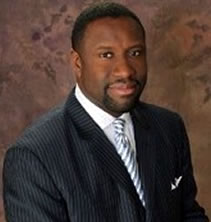
Law Enforcement Training Expert Witness David O'Laughlin
Training & Use of Force Expert
125 HMS Stayner Drive
Hingham MA
02043
USA
phone: 617-212-8850
Law Enforcement Expert Witness Michael Levine
Michael Levine
Expert & Law Enforcement Consultant
PO Box 533
Stone Ridge NY
12484
USA, International, CAN
phone: 845-430-3930
fax: 845-687-4916

 Michael Levine is one of the most decorated Supervisory Agents in the history of the Drug Enforcement Administration. A US Law Enforcement Procedure Expert, Mr. Levine has many decades of courtroom experience (civil & criminal) as a Trial consultant and Expert Witness, including 25 years of service with DEA, Customs, BATF, and the IRS Criminal Investigations Division. Mr. Levine's supervisory and other law enforcement experience includes being in command of task force units combining officers of FBI, BATF, IRS, Customs, NYPD and other police agencies, service as an Internal Affairs supervisory investigator, a senior inspector with the Department of Justice OPR, Office of Professional Responsibility, and Director of a sheriffs department drug bureau.
Mr. Levine, during his decades of trial experience, both as a senior law enforcement officer including the past 30 years as a professional trial consultant, has qualified as an expert witness for both prosecution and plaintiff as well defense, in federal and state courts including 19 states, Puerto Rico and 8 foreign nations. He offers full trial consulting and investigative services in both criminal and civil matters as follows: Expert Witness File Review and Strategy Assessment; Case Particular Design of Cross-Examination "menus"; Investigative, Technical and Research Support; Expert Witness Report and/or Affidavit Preparation. Utilizing his extensive experience as a Supervisory Internal Affairs Investigator, he can also identify the elements of probable cause indicative of false reporting, cover-up, and the concealment of Brady materials. Since the year 2007 he has been retained by the Atlanta and DeKalb County District Attorneys Offices, to conduct police-involved shooting reviews and as such has testified before criminal grand juries leading to the indictment and conviction of law enforcement/violators.
Mr. Levine specializes in full trial consulting services and expert testimony in criminal and civil matters and has testified as an expert in the following areas of expertise:
|
|
A listing of his cases may be found on his website www.policetrialexpert.com.
Michael Levine is the only US law enforcement expert ever admitted to testify before a Japanese court, (Japan v Goldstein) and used the Blind Mule Defense, which resulted in an acquittal. He is a best-selling author, media consultant, lecturer and police instructor with extensive experience as court-qualified expert witness and trial consultant in civil and criminal matters.
Since leaving the Department of Justice, he has been retained in excess of 500 occasions as a trial consultant/expert witness throughout the United States, Canada, England and Japan. Mr. Levine has also remained active as a police instructor in the US, Canada and Australia. In January of 2008, his police instructional manual "Undercover Tactics and Informant Handling" previously written for the Department of Justice, was published by the New York State Department of Justice Services and utilized as an instructional manual for New York State law-enforcement. The manual was subsequently edited and republished by the US State Department for the instruction of Brazilian Federal Police which was conducted by Mr. Levine and his team of US-based experts. The manual was subsequently republished via academia.edu from where it is now among the top .05% of Global downloads by police agencies, attorneys and researchers.
Law Enforcement Expert Witness Robert Johnson
Robert T. Johnson
Lt. Colonel (R)
Palos Heights IL
60463
USA
phone: 708-217-8872
Security Operations Expert Witness Mark Lang
Mark J. Lang, MCJ, CPP, CHPA
Owner
4409 Hoffner Ave., #248
Orlando Florida
32812
USA
phone: 321-804-0221

Police Use of Force Expert Witness David Sweeney
David T. Sweeney
Police Policy & Procedure Expert
4616 25th Ave. NE Suite, #156
Seattle WA
98105
USA
phone: 206-883-6238
Featured resources
by Aaron T. Olson, et al
by Walter P. Signorelli, JD
by James F. Pastor, PhD, JD
Follow us


