A California broker license is required for individuals managing, leasing and selling commercial property or businesses. The dual agency dilemma represents a unique challenge in California, where the law allows a single broker to represent both the buyer and the seller in a single transaction. While many frame a single-point-of-contact as a model of administrative efficiency, the practice creates a structural conflict of interest that tests the absolute limits of fiduciary duty.
While many real estate professionals shy away from discussing the "messy" side of the business, my perspective is shaped by deconstructing these moments for a jury. Serving as an expert witness on the commercial side provides a rare view into the gap between executive expectations and legal obligations. Advocacy for the truth must outweigh the "quick payout" of a double-sided commission.
The Basics
Self-Dealing friction occurs when prioritizing one’s own financial gain over the client, such as steering buyers toward higher-cost properties to maximize commission. Failure to disclose in Commercial Real Estate (CRE) transactions often operate under a "sophisticated party" assumption. The broker's failure to disclose material facts such as known environmental issues, zoning restrictions, temporary use permits, equipment condition, or structural defects is a frequent source of legal friction and litigation. Negligent Misrepresentation/Care violations occur when a broker provides or fails to provide accurate information or proper investigative due diligence. Moreover, the broker must use professional diligence to guide the client. For example, failing to conduct proper investigative due diligence on a property's zoning restrictions or providing guidance in evaluating the condition of mechanical, electrical or plumbing (MEP) systems.
The Illusion of Absolute Neutrality
A fundamental misalignment of goals lies at the core of the problem. Every seller naturally seeks the highest possible price, while every buyer pursues the lowest. Landlords want the fewest concessions, yet tenants require the most. When one individual tries to sit in the middle of these opposing forces, the law demands neutrality. Yet, the very essence of business leadership and real estate strategy is built on advocacy. By attempting to serve as a neutral conduit, a dual agent often becomes a non-advocate, leaving both parties in a representation vacuum where neither side is truly being championed.
The Economics of the Representation Vacuum
Beyond the ethical tension lies a measurable financial impact. Negotiation is a zero-sum game in most commercial transactions; every dollar saved by a tenant is a dollar of lost revenue for a landlord. When a dual agent enters the picture, the aggressive pursuit of favorable terms is replaced by a desire for consensus. Such a "consensus bias" often leads to passive deal-making where neither party achieves their optimal financial outcome. For an institutional investor, a "middle-of-the-road" lease or purchase price can result in a significant yield compression that compounds over the life of the asset. In my experience, the commission saved by using a single broker is almost always dwarfed by the value lost in a compromised negotiation.
Navigating the Regulatory Framework
Strategic risk often stems from a misunderstanding of how California law defines the agency relationship. Under the California Civil Code (CIV 2079.16), the designated broker is considered the legal agent for both parties, regardless of whether different salespersons are assigned to the buyer and seller. Individual "associate licensees" within the same firm essentially inherit a shared fiduciary duty to both sides of the table. Shared responsibility is not merely a formality; it dictates every interaction from initial property tours to the final signature.
Administrative precision regarding disclosure remains another critical bottleneck for many firms. Section 2079.14 of the Civil Code requires that specific agency disclosures be delivered at the "earliest practicable moment," often defined as the first substantive contact where specific property needs are discussed. Failing to meet this timing requirement can jeopardize a broker’s right to a commission and potentially render a purchase agreement voidable. Furthermore, a dual agent must navigate the impossible balance between the duty to disclose all material facts affecting property value and the duty to maintain price confidentiality.
Managing the Liability Surface
The legal landscape has only grown more complex over time. Following the California Supreme Court ruling in Horiike v. Coldwell Banker, a salesperson’s fiduciary duty to the buyer is equivalent to the broker’s duty, even in a dual agency arrangement. Litigation in this arena often centers on "constructive fraud," which is a breach of duty where the agent gains an advantage without necessarily intending to deceive. Even a well-intentioned broker can fall into this trap by failing to emphasize a critical property defect to the buyer that was known to the seller.
Courts increasingly hold brokers to a standard of "utmost good faith." When a deal fails, a jury doesn't look for a smoking gun of intentional malice; they look for a failure to provide the same level of undivided loyalty that a dedicated advocate would have offered. Remedies are severe, ranging from contract rescission to the disgorgement of profits. Notably, a principal may seek to undo a contract based on an undisclosed dual agency even without proving financial injury, making procedural rigor a vital component of deal security.
Actionable Steps for Risk Mitigation
Strategic oversight begins with a rigorous audit of the brokerage’s internal structure. Before consenting to shared representation, you should demand a written explanation of the firm’s "Chinese Wall" protocols. Verifying that digital files and sensitive communication channels are strictly segregated between internal teams is essential to preventing accidental information leaks.
Furthermore, engaging an independent, third-party consultant for a separate valuation or lease audit provides a necessary "sanity check." Since a dual agent is legally restricted from aggressively pursuing the best possible price for one side over the other, an outside perspective ensures that capital is not being sacrificed for the sake of a convenient closing. Independent oversight functions as a vital insurance policy against the yield compression that often haunts middle-of-the-road deals.
Protecting a commercial client’s financial interest requires a shift in perspective. Owners must move beyond standard disclosure forms and demand a clear, written narrative on how confidentiality and specific interests will be protected. Questioning the "insider advantage" of a deal that seems too easy is essential when the broker represents both sides. In a complex and evolving market, the cost of a dedicated advocate is always lower than the cost of a post-closing lawsuit. A successful closing requires a clear path, and avoiding the roadblock of conflicting loyalties.
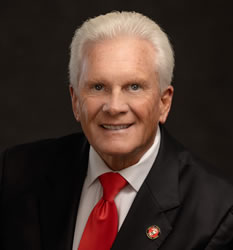
Dr. Dick Bridy's extensive experience in the commercial real estate industry, spanning over four decades, makes him a highly qualified expert witness. As an investor, developer, asset manager, lender, syndicator, and Realtor, he possesses a deep understanding of the industry's intricacies.
Dr. Bridy leads a team of seasoned professionals with complementary expertise in real estate ownership and construction disciplines, including architecture, engineering, scheduling, and construction management. His profound knowledge of California's building codes and safety regulations, outlined in Title 24 of the California Building Code (CBC), Part 3 (California Electrical Code), NFPA 70, and National Electrical Code (NEC), as well as, the Americans with Disabilities Act (ADA) and Occupational Safety and Health Administration (OSHA) and other relevant legislation, positions him as a valuable asset in personal injury cases.
When legal issues arise, such as on-site injuries or contract disputes, DBI offers comprehensive support throughout the legal process. From pre-litigation consultation to expert testimony, Dr. Bridy and his team provide invaluable insights and analysis.
©Copyright - All Rights Reserved
DO NOT REPRODUCE WITHOUT WRITTEN PERMISSION BY AUTHOR.